
A Few Things You Need to Know Before Starting Your Project : Must Know
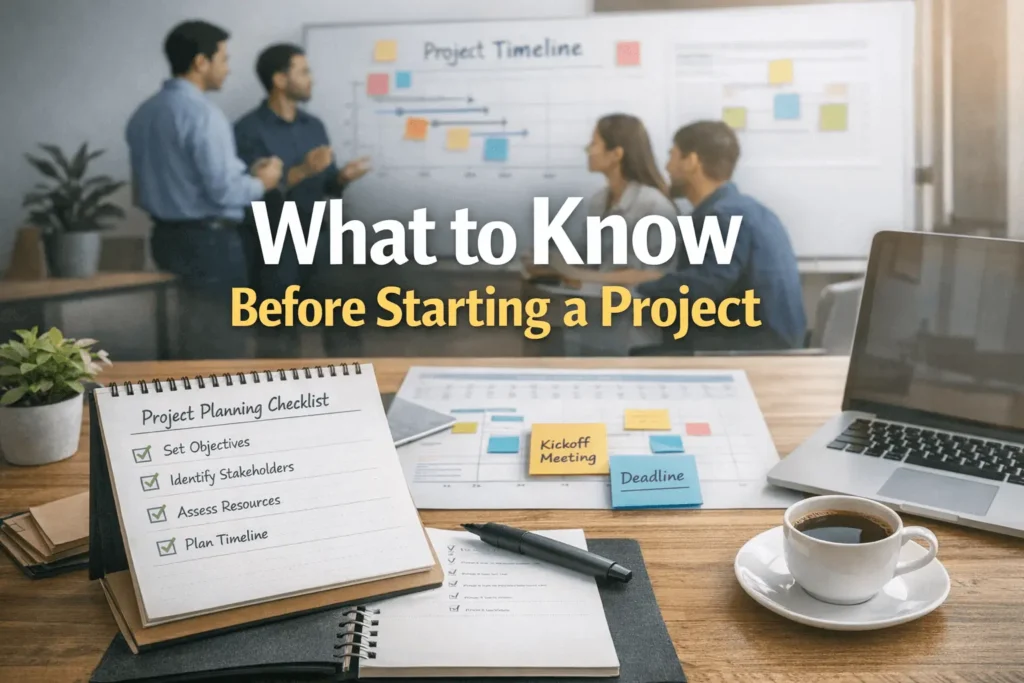
Starting a project without preparation often leads to delays, wasted money, and frustration. Knowing what to know before starting a project helps you stay organized, avoid common mistakes, and reach your goals faster. Good project preparation sets a clear path before any real work begins.
1. Define Your Objectives
Before anything else, be clear about your goals. Ask yourself why this project matters and what success looks like. This step helps with setting objectives and keeps everyone focused.
Clear goals answer two questions:
-
Why are we doing this project?
-
What do we want to achieve at the end?
Strong project goals make it easier to plan the next steps.
2. Identify Stakeholders
Every project has people involved. Some do the work, and others make decisions. List everyone who has a role or interest in the project.
Knowing who decides what helps avoid confusion later. It also makes the project kickoff smoother and faster.
3. Assess Your Available Resources
Look at what you already have. Think about time, budget, skills, and tools. This step is a key part of things to do before starting a project.
Ask simple questions:
-
How much time do we have?
-
What is the budget?
-
Do we have the right skills and tools?
Being honest here prevents problems later.
4. Anticipate Risks
Every project has risks. These could be delays, budget issues, or skill gaps. Spotting risks early helps you avoid common project mistakes.
Write down possible problems and think of simple solutions. This makes your plan stronger and more realistic.
5. Create a Communication Plan
Good communication keeps projects on track. Decide how and when updates will be shared.
Set clear rules like:
-
Weekly check-ins
-
Quick updates by email or chat
-
Who reports to whom
This step is one of the best project planning tips you can follow.
6. Choose Your Project Tools
Pick tools that fit your team. You may need task managers, calendars, or file-sharing tools.
Simple tools work best. The goal is to make work easier, not harder. This is an important step in how to start a project the right way.
7. Set a Realistic Timeline
Create a timeline with clear milestones. Do not rush. Add extra time for unexpected delays.
A realistic timeline is one of the most important steps before starting a project. It helps everyone know what to do and when.
8. Write a Project Brief
A project brief is a short one-page plan. It explains goals, roles, timeline, and tools.
This brief acts as a project planning checklist that everyone can refer to at any time.
9. Hold a Kickoff Meeting
Start the project with a kickoff meeting. Review goals, roles, and timelines together.
This meeting helps everyone feel aligned and confident. A strong kickoff improves teamwork and reduces mistakes.
10. Stay Flexible but Focused
Even the best plans may need changes. Be open to adjustments, but stay focused on the main goals.
Flexibility helps projects move forward without losing direction.
Conclusion
Knowing what to know before starting a project helps you plan better, save time, and avoid stress. Clear goals, smart planning, and good communication make a big difference.
Quick Checklist:
-
Clear objectives
-
Right people involved
-
Realistic budget and timeline
-
Simple tools and communication plan
Ready to move forward? Let’s start and turn your plan into action with Universal Renovation. Let’s talk and build your project the right way.